

For most of us, we’ve either personally suffered from gout or at least know someone personally who has. Though many of us are aware that if gout is left untreated, it can cause long-standing joint damage, what many are not aware of is that people who’ve suffered from gout are at an increased risk of death from all causes, an increased risk of death from coronary heart disease, and an increased risk of death from cardiovascular disease.
Conversely, people who have high cholesterol levels, high levels of adiposity/are overweight, have high blood pressure, and/or poor blood sugar control/insulin resistance, are at an increased risk of developing gout. Continue reading to find out about various natural remedies for gout.
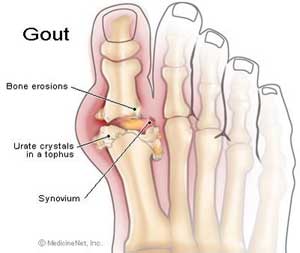
What Is Gout?
Gout is a common disorder that affects approximately 1% of the population in the United States.
The cardinal feature of gout is an inflammatory arthritis
Gout, however, is a metabolic condition. Specifically, it involves uric acid metabolism that can lead to deposition of monosodium urate (MSU) crystals in soft tissue, recurrent episodes of joint inflammation, and, if left untreated, joint destruction and kidney damage.
The culprit for gout is the amount of urate in the body which depends on the amount ingested, synthesized, and excreted. 90% of the uric acid levels are determined by the amount excreted.
Risk Factors for Gout
- meat
- seafood
- beer
- adiposity
- weight gain
- hypertension
- diuretic use
***protein and purine-rich vegetables (not purine-rich meat) were exonerated as potential risk factors
New Risk Factors for Gout:
- fructose
- sugar-sweetened soft drinks
How to Prevent Gout Naturally?
- Coffee
- Vitamin C
- Low-Fat Dairy Products
What Is the Best Diet for Gout?
Low Purine Diet – Wrong!
A low purine diet is often difficult to sustain for long period. A low purine diet is often high in saturated fat and refined carbohydrates which worsen insulin resistance and cholesterol levels.
Diet Aimed to Lower Insulin Resistance
“In contrast, a diet aimed to lower insulin resistance can not only improve uric acid levels but also improve insulin sensitivity and decrease plasma glucose, insulin, and triglyceride levels, which could lead to a reduction in the incidence and mortality of CVD” (Choi, 2010).
Natural Remedies for Gout? (Choi, 2010)
1. Weight Reduction and Daily Exercise:
A higher percentage of body fat is associated with higher uric acid levels and a higher risk of gout. Conversely, losing weight lowers your risk of gout. For those who are trying to slim down, options also include Coolsculpting or using Botox to slim your face.
2. Limit Red Meat Intake:
Red meat is high in purines and saturated fats. The high purine content causes an increased risk of gout while the high saturated fat content is associated with an increased risk of insulin resistance.
3. Avoid Seafood:
Seafood is high in purine content as well, so seafood intake has also been linked to a higher risk of gout. Seafood intake should be tailored to the individual with possible supplementation with omega-3 fatty acids for their cardiovascular health benefits.
4. Drink Skim Milk or Consume Low-Fat Dairy Products:
(up to 2 servings per day) Low-fat dairy consumption is associated with a decreased future risk of gout.
Consume vegetable protein, nuts, legumes, and purine-rich vegetables as they do not increase the risk of gout.
5. Reduce Consumption of Alcoholic Beverages:
Beer and liquor should be reduced in particular.
However: “The overall health benefits of sensible moderate drinking (1–2 drinks/day for men and 1 drink/day for women) likely outweigh the risks, as more than 60 prospective studies have consistently indicated that moderate alcoholic consumption is associated with a 25–40% reduced risk for CHD. (Choi, 2010).”
6. Limit Intake of Sugar-Sweetened Beverages:
Fructose in these drinks increases the risk of gout and elevates uric acid levels. Fructose intake is also linked to weight gain, obesity, and insulin resistance.
Allow coffee drinking if you’re already drinking coffee. Coffee consumption in moderation has been associated with a lower risk of gout, Parkinson’s disease, kidney stones, gallstones, and type II diabetes.
- However, intermittent use of coffee or new use of large amounts of coffee could potentially trigger gout.
7. Vitamin C Supplementation –
Vitamin C supplementation has both been linked to lower levels of uric acid as well as future risk of gout. An older study found that consumption of bing sweet cherries (280 g) lowered serum uric acid levels in women (Jacob et al, 2003).
If you’ve suffered from gout, it’s certainly no laughing matter even if it is referred to as the disease of kings. Hopefully, some of these dietary and natural remedies will help to reduce the pain and other symptoms of gout.
References:
- Choi HK. A prescription for lifestyle change in patients with hyperuricemia and gout. Curr Opin Rheumatol. 2010 Mar;22(2):165-72.
- Jacob RA, Spinozzi GM, Simon VA, Kelley DS, Prior RL, Hess-Pierce B, Kader AA. Consumption of cherries lowers plasma urate in healthy women. J Nutr. 2003 Jun;133(6):1826-9.