
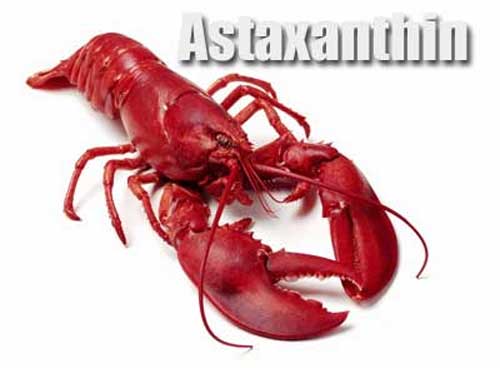
Astaxanthin is a very potent antioxidant that we’ll be hearing more and more about over the coming years. Specifically, it functions as a carotenoid antioxidant though it does not get converted to vitamin A. Though it’s a ubiquitous pigment found in the marine environment which provides the pinkish-red color to lobsters, shrimp, salmon, and crayfish, it’s actually produced by microalgae and phytoplankton.
What is Astaxanthin?
The green microalgae, Haematococcus pulvaris, is believed to have the largest capacity to accumulate astaxanthin though it’s also found in other microalgae such as Chlorella zofingiensis and Chlorococcum sp. Supplements containing Astaxanthin are also available from natural sources such as Krill.
Health Benefits of Astaxanthin:
Researchers from China recently summarized a number of the potential health benefits of Astaxanthin supplementation[1]. As a potent antioxidant, the myriad of potential health benefits is staggering. However, there’s still fairly limited research regarding the optimal dosage, safety, and general effectiveness of this supplement in human studies[3].
Free radicals and other reactive oxygen species are produced during normal life-sustaining aerobic metabolism. In excess, these molecules can cause protein and lipid oxidation and DNA damage. Numerous diseases are associated with this type of cellular damage. Exogenous antioxidants such as carotenoids can help to attenuate or limit this damage.
Potential Health Conditions:
As mentioned, the list of potential health conditions for which astaxanthin may be of benefit is exceptionally long. Specifically, the review article by Yuan et al [1] included inflammatory diseases such as rheumatoid arthritis, atherosclerosis, asthma, inflammatory bowel disease, and brain inflammatory diseases.
As well, its role as a free-radical scavenger may be of benefit in conditions such as protecting against ethanol-induced gastric damage, diabetes, cardiovascular disease, some types of cancer, as well as neurodegenerative conditions such as Alzheimer’s and Parkinson’s diseases. They also noted the potential ocular, hepatic, and skin protective effects as well as beneficial effects on the immune system.
In conclusion, the authors of this study noted that the growing evidence from tissue culture, animal, and clinical studies is encouraging, but more extensive well-controlled trials are needed.
For those who’re interested in supplementation with astaxanthin, caution would be advised since there are still fairly limited data regarding the dosage and safety in humans. The currently recommended dosage of astaxanthin as a supplement has been suggested to be in the range of 2-6 mg/day [4].
Another review study of the putative health benefits of astaxanthin supplementation [3] concluded the following:
“Based on recently published literature, we conclude that consumption of astaxanthin (ASTA) obtained from natural sources (salmon, shrimp, krill oil etc) or via dietary supplements (from biotechnologically manufactured H. pluvialis biomass) might be a practical and beneficial strategy in exercise practice and health management.”
The article included some debate as to whether or not astaxanthin crosses the blood-brain barrier or whether it may be beneficial for improving athletic performance. At this point, there’s insufficient evidence to suggest that it attenuates muscle injury following resistance training exercise [5]. In contrast, a study by researchers in Japan found that it did reduce muscle lactic acid build-up following 1,200 m of running.
Dr. Mercola wrote an article about the potential health benefits of astaxanthin. It’s a pretty well-referenced summary though some may find it’s a little “salesy” since his site does offer krill oil and related products.
References:
- Yuan JP, Peng J, Yin K, Wang JH. Potential health-promoting effects of astaxanthin: a high-value carotenoid mostly from microalgae. Mol Nutr Food Res. 2011 Jan;55(1):150-65. doi: 10.1002/mnfr.201000414. Epub 2010 Nov 18.
- Barros M, Poppe S, Souza-Junior T. Putative benefits of microalgal astaxanthin 21(2): 283-289, Mar./Apr. 2011 on exercise and human health. Brazilian Journal of Pharmacognosy 21(2): 283-289, Mar./Apr. 2011
- Kupcinskas, L., Lafolie, P., Lignell, A., Kiudelis, G. et al., Ef?cacy of the natural antioxidant astaxanthin in the treatment of functional dyspepsia in patients with or
without Helicobacter pylori infection: a prospective, randomized, double-blind, and placebo-controlled study. Phytomedicine 2008, 15, 391–399 - Stewart JS, Lignell A, Pettersson A, Elfving E, Soni MG 2008. Safety assessment of astaxanthin-rich microalgae biomass: Acute and subchronic toxicity studies in rats. Food Chem Toxicol 46: 3030-3036.
- Bloomer RJ, Fry A, Schilling B, Chiu L, Hori N, Weiss L. Astaxanthin supplementation does not attenuate muscle injury following eccentric exercise in resistance-trained men. Int J Sport Nutr Exerc Metab. 2005 Aug;15(4):401-12.